


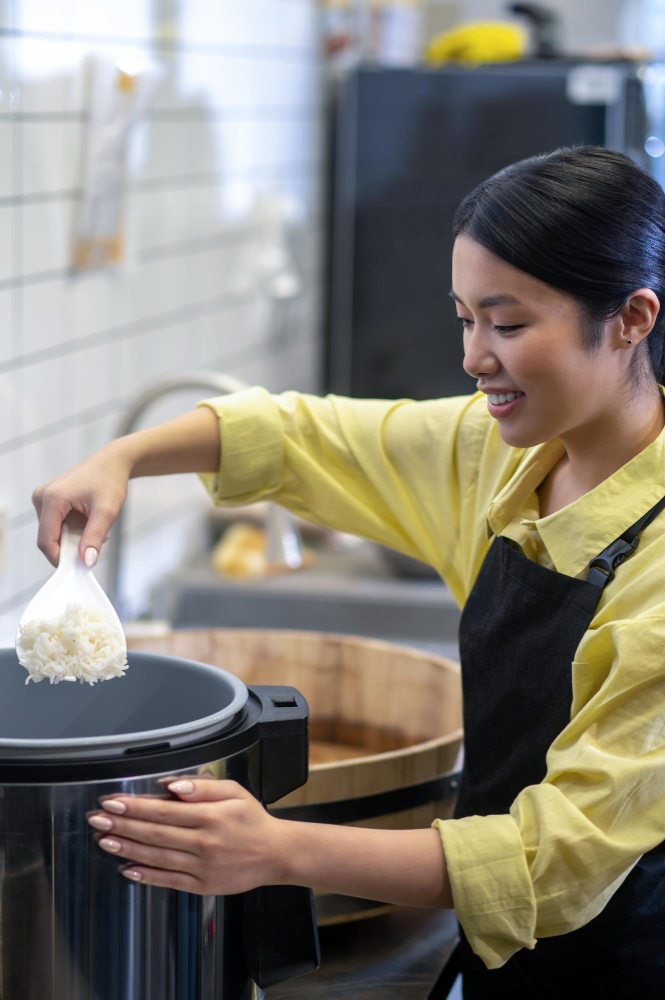
Commercial Rice Cookers: Perfectly Cooked Rice Every Time
In busy commercial kitchens, consistency is everything—especially when it comes to rice. Whether you run a restaurant, catering service, hotel, or large-scale canteen, a rice cooker is one of the most essential appliances for producing perfectly cooked rice in every batch. Designed to handle high-volume output with minimal supervision, commercial rice cookers offer reliability, speed, and uniform results that traditional stovetop cooking can’t match.
This article explores how commercial rice cookers work, their key benefits, essential features, and how to choose the right model for your business.
For related equipment that enhances kitchen productivity, read our guide on Commercial Press Juicers: Extracting Maximum Fresh Juice or explore our Salamander Grill for high-performance finishing tools.
What Is a Commercial Rice Cooker?
A rice cooker is a specialized piece of equipment engineered to cook large batches of rice consistently with minimal supervision. Unlike consumer models, commercial units feature heavier heating elements, larger capacities, and durable construction suitable for high-volume environments. They deliver uniform texture, reduce human error, and free staff to focus on other cooking tasks.
Why Every Professional Kitchen Needs One
Commercial kitchens rely heavily on speed, reliability, and consistency. A rice cooker supports all three by providing:
-
Hands-off cooking that reduces staff workload
-
Consistent texture even during peak rush hours
-
High volume capacity for restaurants serving rice as a main staple
-
Energy efficiency and stable heat distribution
-
Food safety assurance with proper hold modes
This combination makes it a foundational appliance in Asian restaurants, catering companies, hotels, and cafeterias.
Key Features to Look for in a Commercial Rice Cooker
When choosing a rice cooker, prioritize the features that matter most for durability, performance, and ease of use.
1. Capacity
Commercial models typically range from 6 to 30 cups of uncooked rice. Choose based on expected daily output.
2. Heating System
-
Single-Coil Heating: Budget-friendly but less consistent
-
Surround Heating: More even cooking
-
Induction Heating: Premium, highly accurate, and energy-efficient
3. Inner Pot Quality
A high-quality inner pot improves cooking performance and cleaning convenience:
-
Thick aluminum or stainless steel
-
Non-stick options available for easier maintenance
4. Cook & Hold Functions
A rice cooker with keep-warm mode ensures rice stays at safe serving temperature for hours without drying out.
5. Speed & Efficiency
Commercial kitchens benefit from faster cooking cycles, especially during peak service.
6. Durability
Sturdy body construction, reinforced handles, and commercial-grade heating components ensure long lifespan.
Benefits of Using a Commercial Rice Cooker
A commercial-grade rice cooker provides several operational advantages:
-
Consistent Results: Perfect texture every time
-
Reduced Labor: Less monitoring required
-
High-Volume Efficiency: Large batches cooked quickly
-
Energy Savings: Optimized heating reduces electricity consumption
-
Improved Food Safety: Stable temperature holding
-
Reliability During Rush Hours: No delays in serving
These benefits make it an indispensable appliance for rice-based cuisines.
Types of Commercial Rice Cookers
1. Standard Electric Rice Cookers
Reliable, affordable, and widely used. Ideal for most restaurants.
2. Gas Rice Cookers
Provides strong heating for extra-large batches, common in high-demand kitchens.
3. Induction Rice Cookers
Known for superior consistency, faster cooking times, and precision temperature control.
4. Multi-Function Rice Cookers
Offer settings for porridge, grains, steaming, and even slow cooking. Useful for multi-purpose kitchens.
How to Choose the Right Rice Cooker for Your Business
Follow these steps when selecting the best model:
✔ Determine Your Daily Rice Output
Small cafés may only need a 10-cup model, while busy restaurants often require 30-cup capacity or more.
✔ Consider Menu Variety
If you serve various rice types (jasmine, basmati, brown rice), choose a model with multiple cooking programs.
✔ Evaluate Staff Skill Level
A rice cooker with simple one-button operation is ideal for fast-paced environments or rotating staff.
✔ Think About Kitchen Space
Choose a design that fits your countertop layout without obstructing workflow.
✔ Check for Safety Features
-
Thermal fuses
-
Auto shut-off
-
Cool-touch exterior
-
Overheat protection
✔ Look for Durability
Commercial-focused materials ensure longer life and consistent performance.
Best Uses for Commercial Rice Cookers
A high-quality rice cooker is valuable in:
-
Asian restaurants
-
Catering operations
-
Food courts
-
Hotel buffets
-
Meal prep businesses
-
University and corporate cafeterias
It excels at producing fluffy, uniform rice without constant monitoring.
Maintenance Tips for Long-Lasting Performance
To keep your rice cooker performing like new:
-
Clean the inner pot after every batch
-
Avoid abrasive cleaners to protect non-stick coatings
-
Wipe exterior and heating plate daily
-
Keep the lid vent clean for safe steam release
-
Inspect power cords regularly
-
Replace inner pots if coating begins wearing off
Reliable maintenance ensures consistent results and extends appliance lifespan.
Common Mistakes When Using a Rice Cooker
Avoid these habits that reduce performance:
-
Overfilling the pot
-
Using incorrect water ratios
-
Leaving rice on warm mode too long
-
Storing rice inside the cooker
-
Using metal utensils
Preventing these mistakes results in better texture and longer equipment life.
Frequently Asked Questions (FAQ)
1. Can a commercial rice cooker cook other grains?
Yes, many models can prepare quinoa, brown rice, porridge, and even steam vegetables.
2. How long can rice stay in keep-warm mode?
Most commercial units keep rice safe and fluffy for 4–8 hours, depending on the model.
3. Are gas rice cookers better than electric ones?
Gas units are stronger and better for very large batches, while electric models are easier to operate.
4. What capacity do most restaurants choose?
The most common size is 20–30 cups uncooked capacity.
5. Do I need a non-stick inner pot?
Non-stick makes cleaning easier, but stainless steel is more durable for heavy-duty use.
This guide reflects expert insights into commercial kitchen equipment, combining industry-level knowledge, practical buying considerations, and operational best practices. Every recommendation prioritizes food safety, efficiency, and long-term value for professional food businesses.
Conclusion
A commercial rice cooker is one of the most dependable appliances for restaurants and catering kitchens. It guarantees perfect texture, consistency, and speed—every time. By choosing the right model with suitable capacity, heating technology, and durability, your kitchen can operate more efficiently and serve high-quality rice throughout the day.