


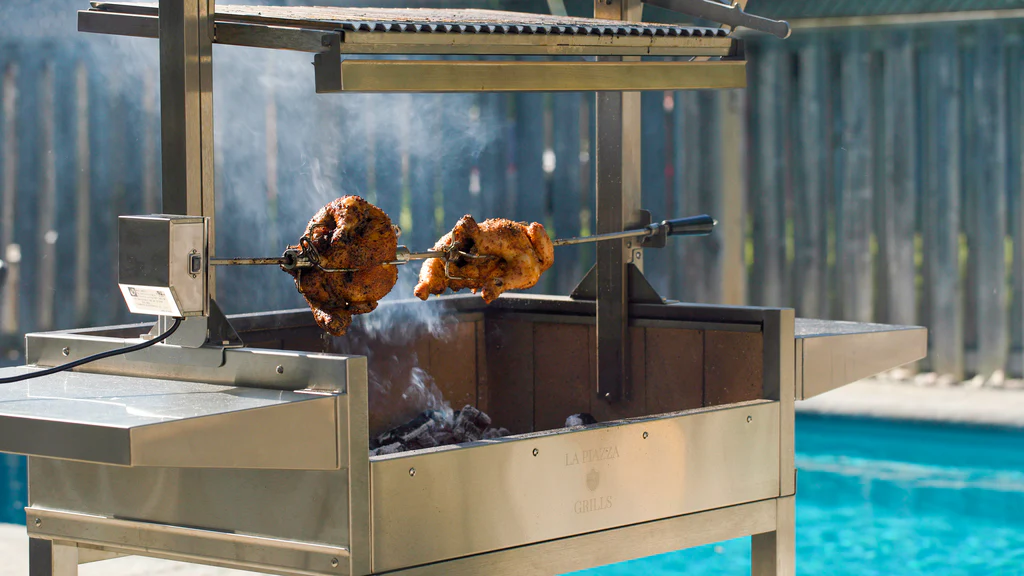
How to Choose Your Charcoal Chicken Machine
There’s something irresistible about chicken roasted over charcoal—the smoky aroma, the crisp edges, juicy interior, and that depth of flavour that only charcoal can provide. For commercial kitchens and serious food businesses, investing in a charcoal chicken machine can dramatically elevate your offering. But choosing the right commercial kitchen equipment isn’t just about grabbing the biggest model or the fanciest brand. Here’s your guide to making an informed decision.
What is a Charcoal Chicken Machine?
A charcoal chicken machine (sometimes called a charcoal chicken spit or rotisserie) is a commercial piece of cooking equipment that uses charcoal as its heat source to roast chicken and other meats. Its appeal lies in the authentic smoky flavour it imparts, the visual appeal of roasting, and its ability to cook large volumes consistently. These machines are commonly found in chicken shops, restaurants, catering businesses, and market stalls.
Key Factors to Consider When Choosing
When selecting a charcoal chicken machine, you’ll want to balance capacity, build, features, ease of use, maintenance, and cost.
1. Capacity & Size
-
How many chickens or portions will you roast per cycle? If you run a small shop or food stall, a smaller spit might be adequate. For large-scale operations such as restaurants or catering businesses, you’ll need larger capacity machines.
-
Consider the footprint: you’ll need space for the machine itself, for ventilation, for charcoal loading and ash removal, and for safe staff access.
2. Heat Source & Charcoal Efficiency
-
Charcoal type: quality charcoal that burns cleanly, with minimal smoke or impurities, is essential.
-
Heat control: some machines allow you to regulate the distance of the charcoal bed from the meat or adjust airflow for better temperature management.
3. Rotation & Motor Reliability
-
Rotisserie speed: a good spit should turn steadily and at a suitable speed to ensure even browning without burning.
-
Motor build quality: look for motors designed for heavy-duty use, with robust casing and protection against grease and heat.
4. Construction, Materials & Durability
-
Stainless steel bodies are ideal: they’re easy to clean, resist rust, and withstand high heat.
-
Charcoal beds and grates should be durable and replaceable.
-
Safety features like guards, insulated handles, and compliance with local food standards are essential.
5. Safety, Ventilation & Compliance
-
Smoke & ventilation: because charcoal creates smoke, proper exhaust or canopy hoods are essential indoors.
-
Food-safety compliance: machines should be easy to clean, with removable parts and smooth surfaces.
-
Fire safety: motors, wiring, and parts should meet relevant safety standards.
6. Ease of Use & Maintenance
-
Look for designs with ash drawers or trays to simplify cleanup.
-
Ensure parts like spit rods, bearings, and baskets are easy to remove and replace.
-
Consider how easily the unit can be installed and integrated into your kitchen or outdoor area.
7. Value for Money & Running Costs
-
Upfront cost: larger machines will be more expensive, but they often pay off with efficiency and capacity.
-
Fuel cost: charcoal has ongoing costs—better quality burns longer but costs more.
-
Operational cost: include staff time, cleaning, and power for motors.
8. Brand & Support
-
Warranty and spare parts availability are critical for long-term reliability.
-
Choosing a reputable supplier gives confidence in build quality and after-sales support.
Why Commercial Charcoal Chicken Machines Stand Out
Well-designed charcoal chicken machines are:
-
Built for heavy duty use, meaning they withstand long hours of operation.
-
Available in multiple sizes, from small spit-style units up to large multi-row rotisseries.
-
Reliable, thanks to durable motors and stainless steel construction.
-
Efficient, providing authentic smoky flavour with consistent results.
Step-By-Step Process to Choose the Right Machine
-
Estimate your daily throughput: how many chickens or kilos of meat will you cook per day?
-
Check your space and location: indoor vs outdoor, ventilation needs, and available power.
-
Balance quality vs quantity: are you focused on premium flavour and presentation, or speed and efficiency?
-
Set a budget: include purchase price plus running costs like charcoal, cleaning, and staff time.
-
Compare models: look at capacity, motor durability, ease of cleaning, and safety features.
-
See it in action if possible: demonstrations, videos, or supplier visits help confirm your choice.
- Recommended models:
- Here are some of the models listed under Charcoal Chicken Machine on the Atlantic Equipment page, with direct links to their product pages via the model name:
- Semak M10CW Weekender Charcoal Spit — compact spit, good for smaller volume.
- Semak M10CSS Small Charcoal Spit — small size, suitable for low-volume settings.
- Semak M10CBS Small Charcoal Spit — another small variant with slight changes in design.
- Semak M10CBM Medium Charcoal Spit — medium capacity.
- Semak M10CBL Large Charcoal Spit — larger size, more throughput.
- Semak M10CSL Large Charcoal Spit — alternate large version.
- Semak M28CP Charcoal Rotisserie — higher capacity rotisserie.
- Semak M28CB Charcoal Rotisserie — larger capacity still.
- Semak M28C2 Charcoal Rotisserie — premium large rotisserie model.
- Semak M28C Charcoal Rotisserie — top-of-the-line (highest capacity in the range listed).
- Here are some of the models listed under Charcoal Chicken Machine on the Atlantic Equipment page, with direct links to their product pages via the model name:
Tips for Getting the Best Results
-
Preheat charcoal until it’s glowing and producing steady heat before loading chickens.
-
Avoid overloading the spit—airflow is key to even cooking.
-
Clean thoroughly after every use to prevent grease buildup and preserve flavour.
-
Adjust charcoal levels during cooking to avoid burning while maintaining crisp skin. To complete your kitchen, you might need hot plates & commercial ovens.
FAQ
Q: Can I use any type of charcoal in my machine?
A: It’s best to use high-quality lump charcoal or briquettes that burn cleanly and evenly. Avoid products with fillers, additives, or chemicals as these can affect taste, produce excessive smoke, and damage your equipment.
Q: How much space is required for ventilation?
A: You need adequate clearance around the machine, plus proper ventilation if indoors. Many kitchens install canopy hoods or professional exhaust systems. Outdoors, ensure smoke is directed away from staff and customers.
Q: What maintenance is involved?
A: Regular cleaning of ash trays, grates, and spit rods is essential. Motors should be inspected for grease buildup and wear. Charcoal baskets or grates may need replacement over time. A well-maintained machine will last much longer.
Q: How long does a commercial charcoal chicken machine last?
A: With quality construction and consistent cleaning, these machines can last 5–10 years or more, even with heavy daily use. Lifespan depends on motor care, frequency of use, and how well the machine is cleaned and stored.
Conclusion
Choosing the right charcoal chicken machine requires careful thought about capacity, build, efficiency, durability, and ongoing costs. By considering your throughput, space, ventilation, and budget, you can select a machine that provides authentic smoky flavour, reliable performance, and long-term value for your business.