


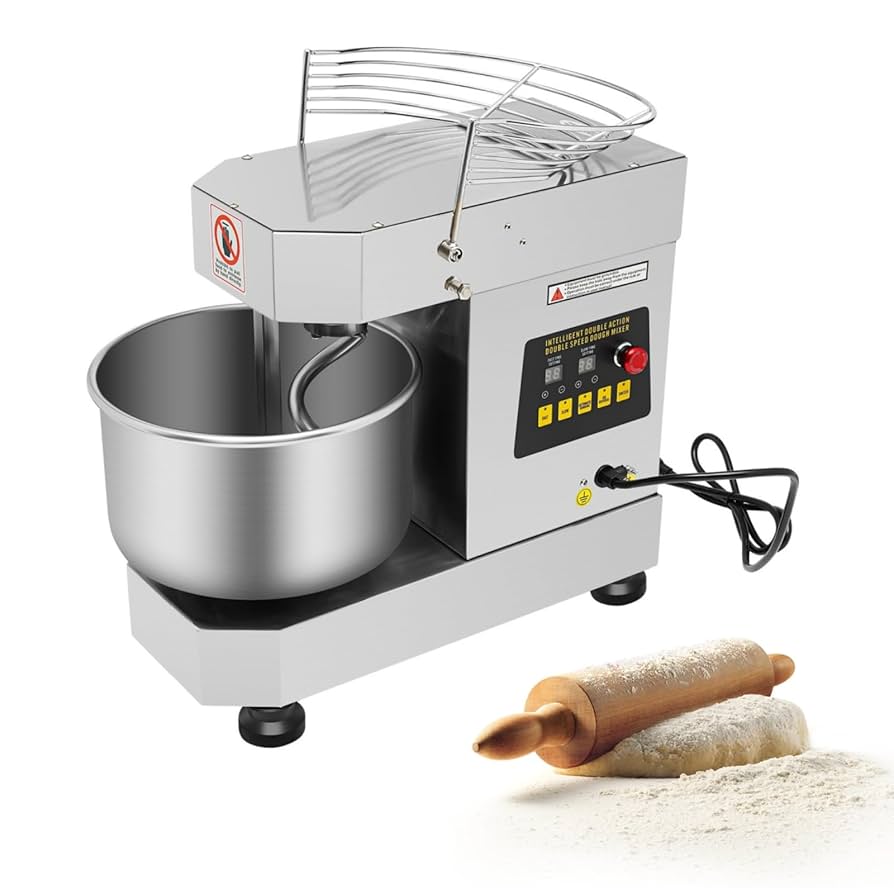
How to Choose the Right Spiral Dough Mixer
When it comes to producing high-quality bread, pizza, and pastries on a commercial scale, one piece of equipment makes all the difference: the spiral dough mixer. Unlike a planetary mixer that can be used for multiple applications, spiral mixers are designed specifically for kneading dough efficiently, consistently, and gently. They replicate the traditional hand-kneading process, ensuring gluten development without overheating the dough.
But with so many models and features available, how do you select the right spiral mixer for your business? Whether you run a bakery, pizzeria, or restaurant, the right choice can increase productivity, improve dough quality, and reduce labour. This guide will walk you through the most important considerations before investing in a spiral dough mixer.
Understanding What a Spiral Dough Mixer Does
A spiral dough mixer consists of a fixed spiral hook and a rotating bowl. As the hook kneads, the bowl slowly turns, ensuring every portion of the dough is worked evenly. This design prevents the dough from overheating, which is crucial for yeast activity and gluten strength. Spiral mixers are ideal for high-hydration doughs like ciabatta, bagels, pizza dough, and artisan breads.
Unlike planetary mixers, which are more versatile but less specialized, spiral mixers excel in one area: dough. Their efficiency, gentle handling, and consistency make them the gold standard in bakeries worldwide.
Step 1: Evaluate Your Production Needs
Before choosing a model, determine how much dough you need to produce per batch and per day. A small bakery might only require a mixer with a 20-kilogram dough capacity, while a pizzeria preparing hundreds of pizzas daily may need a machine capable of handling 60–100 kilograms per batch.
-
Small capacity (10–20 kg dough): Suitable for small bakeries, food trucks, and restaurants with lower dough output.
-
Medium capacity (30–50 kg dough): Fits busy pizzerias and mid-sized bakeries.
-
Large capacity (60–120 kg dough): Designed for industrial bakeries and high-volume operations.
Remember to consider future growth. Choosing a mixer slightly larger than your current needs can prevent bottlenecks as your business expands.
Step 2: Understand Flour Capacity vs. Dough Capacity
Manufacturers often list both flour and dough capacity. For example, a mixer with a 25-kilogram flour capacity might handle around 40 kilograms of finished dough. Always check both numbers to ensure the machine matches your requirements. Exceeding capacity can strain the motor, reduce dough quality, and shorten the lifespan of the mixer.
Step 3: Choose Between Single-Speed and Two-Speed Mixers
Spiral mixers are commonly available in two types:
-
Single-speed mixers: These run at one consistent speed. They’re simple, reliable, and often less expensive. Best for small operations or businesses with straightforward dough recipes.
-
Two-speed mixers: These start at a slow speed for combining ingredients, then shift to a faster speed for kneading and gluten development. They provide greater control, consistency, and flexibility for different dough types.
For most professional bakeries and pizzerias, a two-speed mixer is recommended, as it delivers superior results and shortens mixing times.
Step 4: Consider the Bowl Design and Features
The bowl plays an equally important role as the hook. When selecting a spiral mixer, look at these features:
-
Fixed bowl vs. removable bowl: Smaller mixers often have fixed bowls, while larger units may allow bowl removal for easier handling and cleaning.
-
Bowl reverse function: Some mixers can rotate the bowl in both directions, improving mixing and speeding up dough development.
-
Safety guards: Transparent or stainless-steel guards keep operators safe while allowing them to monitor the dough.
Step 5: Assess Build Quality and Materials
Durability is critical in a commercial kitchen. High-quality spiral dough mixers are built with:
-
Heavy-duty stainless steel bowls and spiral arms for longevity and easy cleaning.
-
Reinforced frames to handle vibration and heavy workloads.
-
Reliable motors and drive systems designed for continuous use.
Investing in a well-built machine saves money in the long run by reducing breakdowns and extending equipment life.
Step 6: Look for User-Friendly Features
A spiral mixer should make life easier for your team. Consider:
-
Digital timers that allow you to set and forget, ensuring consistent mixing times.
-
Automatic shut-off when the cycle is complete, reducing staff oversight.
-
Ergonomic controls for quick operation.
-
Quiet operation to minimize noise in the kitchen.
User-friendly features improve workflow efficiency and reduce training time for staff. At Atlantic Equipment, we know that commercial kitchen equipment need to be efficient, you will need as well other bakery equipment such as dough rollers & bread slicers.
Step 7: Check Power and Electrical Requirements
Mixers vary in their power needs:
-
Smaller units: Often run on single-phase power, suitable for small kitchens.
-
Larger units: Require three-phase power, common in industrial or commercial bakeries.
Always ensure your kitchen’s electrical infrastructure can support the machine you plan to buy. Consulting an electrician before installation can save costly adjustments later.
Step 8: Energy Efficiency and Cost Savings
Modern spiral mixers are designed with efficiency in mind. Features such as energy-saving motors, insulated bowls, and rapid mixing cycles reduce operating costs. While energy efficiency may increase the upfront cost, it saves money over years of continuous operation.
Step 9: Cleaning and Maintenance
Cleaning is vital in any foodservice environment. Choose a mixer with smooth surfaces, rounded corners, and easily removable parts. Models with removable bowls or tools simplify the process. Regular maintenance includes lubricating moving parts, checking belts and motors, and inspecting safety guards.
Having access to spare parts and service support is equally important. A brand with good after-sales support ensures minimal downtime if repairs are needed.
Step 10: Budget and Long-Term Value
Price is always a consideration, but focusing only on upfront cost can be misleading. A cheaper machine may struggle with continuous use, leading to breakdowns and inconsistent dough quality. Consider total cost of ownership: purchase price, energy consumption, maintenance, and expected lifespan.
A high-quality spiral dough mixer should last many years when properly maintained, making it a worthwhile long-term investment.
Step 11: Safety Considerations
In a busy kitchen, safety cannot be overlooked. Ensure the mixer has:
-
Emergency stop buttons.
-
Overheating protection for the motor.
-
Safety interlocks that stop the mixer if the guard is opened.
These features protect both staff and equipment.
Step 12: Match Mixer to Dough Types
Not all dough is the same. Consider the types of products you produce most often:
-
Pizza dough: Needs strength and elasticity; a two-speed spiral mixer is ideal.
-
Artisan bread: Often requires longer, gentler mixing to preserve hydration.
-
Bagels or pretzels: Dense doughs demand a heavy-duty mixer with a strong motor.
Choose a model that matches your signature products for the best results.
Tips for Getting the Most Out of Your Spiral Mixer
-
Weigh ingredients accurately before loading for consistent dough.
-
Don’t overload beyond rated capacity.
-
Use timers to avoid overmixing or undermixing.
-
Clean daily to maintain hygiene and prolong equipment life.
-
Train staff thoroughly on correct operation and safety protocols.
Conclusion
Selecting the right spiral dough mixer is about much more than picking a machine off the shelf. By carefully evaluating capacity, motor strength, bowl design, safety, user features, and long-term value, you can choose a mixer that meets your needs today and supports your growth tomorrow.
A spiral mixer is an investment in consistency, efficiency, and product quality. For bakeries, pizzerias, and restaurants that rely on dough as a cornerstone of their menu, making the right choice ensures smooth operations, happier staff, and satisfied customers.