

How to Choose the Right Commercial Cooking Equipment for Your Restaurant
Choosing the right commercial cooking equipment is a crucial step for any restaurant owner. The equipment you select affects food quality, kitchen efficiency, operating costs, and the overall dining experience. Whether you are opening a new venue or upgrading an existing kitchen, making informed decisions will help your restaurant operate more smoothly and profitably. To explore complete options of professional-grade tools, you can check Atlantic Equipment’s Cooking Equipment collection.
1. Understand Your Restaurant Concept and Menu
Before investing in any equipment, clearly define your restaurant concept. Your cuisine style and menu determine what cooking tools are essential.
Key questions to ask:
-
What type of dishes will you serve?
-
Do you require high-heat cooking, steaming, frying, grilling, or baking?
-
How many meals will be prepared at peak hours?
-
Does your menu require specialty machines?
For example:
-
A steakhouse depends on strong chargrills and cooktops.
-
Fast-food restaurants require fryers and griddles with fast heat recovery.
-
Asian restaurants often need wok burners and steamers.
-
Bakeries need convection ovens, mixers, and proofers.
Identifying menu needs early helps you create a precise equipment checklist.
2. Consider Your Kitchen Layout and Space
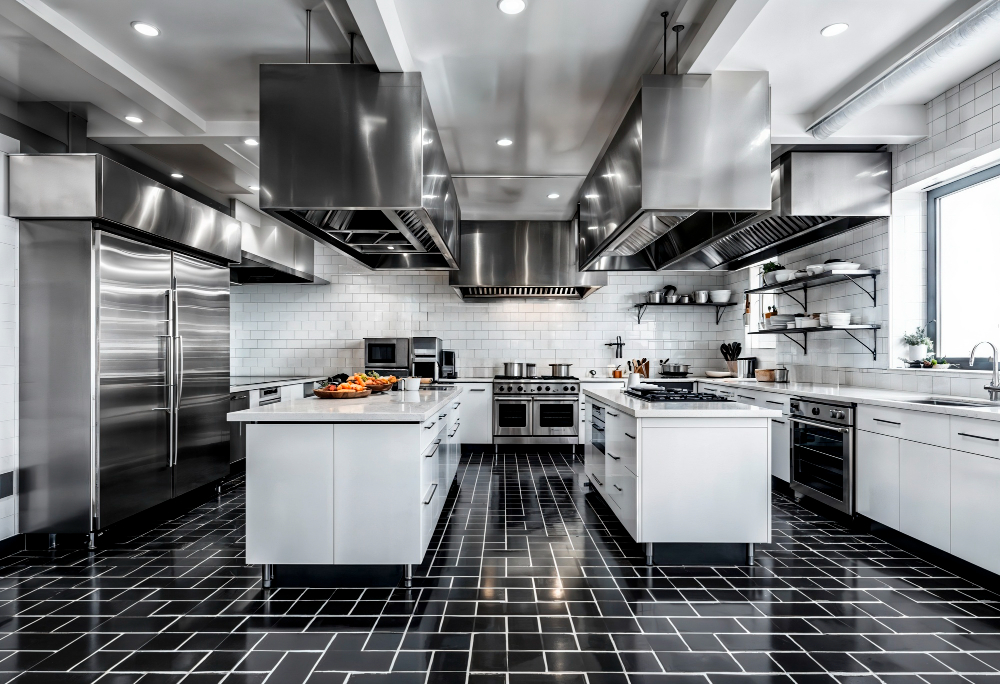
Your kitchen’s available space determines the size and type of equipment you can install. A well-planned kitchen layout improves workflow, minimizes accidents, and boosts productivity.
Important factors:
-
Floor space: Measure accurately before selecting equipment.
-
Ventilation: Fryers, grills, and cooktops require proper exhaust systems.
-
Power and gas lines: Ensure your kitchen can support the equipment’s energy needs.
-
Workflow: Staff should move easily between prep, cook, and service stations.
If space is limited, you may prefer multifunctional units like combination ovens or grill/griddle combos. Proper planning ensures your equipment enhances efficiency rather than creating congestion.
3. Always Choose Commercial-Grade Equipment
Residential appliances cannot handle restaurant-level workloads. Always choose equipment made specifically for commercial kitchens.
Commercial-grade equipment offers:
-
Stronger build quality
-
Higher power output
-
Faster heat recovery
-
Safety certifications
-
Continuous operation capability
-
Easier maintenance and servicing
Since kitchens often operate 10–16 hours per day, durability is essential for long-term reliability.
4. Decide Between Gas and Electric
Each power source has advantages depending on your menu style, location, and budget.
Gas Equipment
Pros:
-
Heats up quickly
-
Ideal for grilling, frying, and high-heat cooking
-
Better temperature control
-
Often cheaper to operate
Cons:
-
Requires gas line installation
-
Needs stronger ventilation
Electric Equipment
Pros:
-
Easier installation
-
More consistent heating
-
Ideal for ovens and specialized machines
-
Safer in enclosed spaces
Cons:
-
Higher energy cost in some regions
-
Slower temperature adjustment
Most professional kitchens use a combination of both depending on equipment type.
5. Evaluate Energy Efficiency and Long-Term Savings
Energy-efficient equipment may cost more upfront, but it reduces your monthly electricity or gas expenses significantly.
Look for:
-
Insulated ovens
-
Energy-saving burners
-
Auto shutoff features
-
Programmable modes
-
Energy Star or MEPS certification
Efficient equipment not only lowers costs but also keeps the kitchen cooler and safer.
6. Check Maintenance Requirements and Service Availability
Maintenance plays a big role in how long your equipment lasts. Poorly maintained machines cause inconsistent cooking, safety risks, and higher repair costs.
Choose equipment that offers:
-
Stainless steel construction
-
Easy-to-remove parts
-
Clear access for cleaning
-
Affordable replacement parts
-
Available local service technicians
Reliable after-sales support is essential — downtime in the kitchen can cost a restaurant hundreds of dollars per hour.
7. Match Equipment Capacity With Customer Volume
Choosing equipment based on expected customer volume avoids bottlenecks and ensures smooth operations.
Examples:
-
Small cafés may only need compact griddles or a small oven.
-
High-volume fast-food outlets require multiple fryers with high recovery times.
-
Large hotel kitchens need multiple burners, ovens, and prep stations.
Buying underpowered equipment leads to slow service and unhappy customers. Oversizing, however, wastes space and energy, so match your capacity carefully.
8. Prioritize Essential Equipment First
If you’re working within a set budget, prioritize equipment that directly affects your core menu. Specialty items can always be added later.
Common essential cooking equipment includes:
-
Commercial cooktops and ranges
-
Deep fryers
-
Grills and griddles
-
Convection or combi ovens
-
Steamers
-
Charbroilers
After establishing your core cooking line, you can add supporting equipment like salamanders, pasta cookers, or vacuum sealers.
9. Buy from a Trusted Supplier
Purchasing from a reliable supplier ensures you receive high-quality equipment, warranty coverage, installation guidance, and long-term support.
Atlantic Equipment provides a full range of high-performance kitchen tools suitable for restaurants, cafés, and catering businesses. Their selection includes commercial fryers, ovens, grills, steamers, and other essential equipment designed to support efficient and reliable kitchen operations for various types of food service establishments.
Final Thoughts
Choosing the right commercial cooking equipment is not just about price — it’s a long-term investment influencing your food quality, kitchen speed, staff productivity, and operational costs. By understanding your menu, planning your layout, evaluating energy efficiency, and selecting trusted suppliers, you can build a kitchen that supports your business goals and ensures long-term success.