


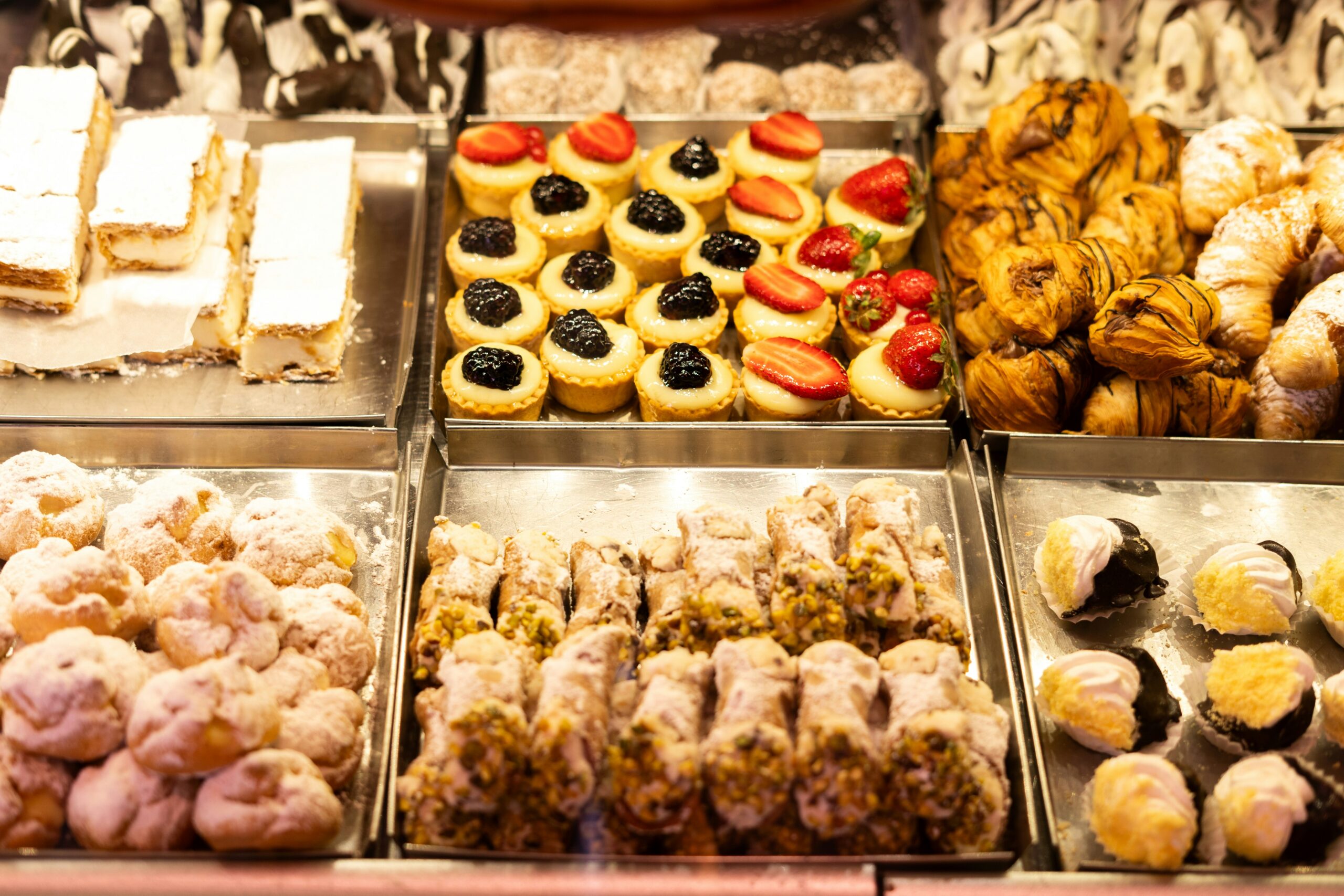
The Science of Appetite: Why Strategic Food Display Triggers Hunger
Food display strategy is your most powerful sales tool in a competitive market. Before a customer ever tastes your menu, they “eat with their eyes,” making your presentation the primary driver of impulse purchases. This psychological trigger, known as “eye hunger” (lapar mata), relies entirely on how you showcase your inventory to the public. Because of this, understanding the sensory secrets behind your presentation is essential. Get the best kitchen gear for your business only at Atlantic Equipment.
The Sensory Pillars of a Successful Food Display
While the build quality of your cabinet matters, the science of attraction goes much deeper than glass and steel. A successful food display masters three critical factors:
- Lighting and Color: Warm, high-CRI (Color Rendering Index) lighting makes proteins look richer and vegetables look more vibrant. If the lighting is too blue, food looks clinical and unappealing.
- The Aroma Factor: Scent is the only sense linked directly to the brain’s memory center. Venting the subtle smell of baked goods or roasted meats near your food display creates an irresistible pull.
- Abundance vs. Scarcity: A full, lush display signals freshness and success, while a nearly empty shelf can look like “leftovers.”
Furthermore, maintaining absolute hygiene is non-negotiable. Fingerprints on glass or stray crumbs act as immediate “appetite killers.” To keep your prep area as pristine as your front-of-house, many high-end kitchens utilize commercial dishwashers to ensure every tray and garnish plate sparkles.
Food Display Designed for “Eye Hunger”
Strategic placement determines how long a customer’s gaze lingers on your products. You should place your high-margin “hero” items at eye level, where the human brain processes information most quickly. This layout creates a focal point that anchors the rest of your food display.
To complement your hot or ambient selections, you must also consider your cold storage. Many cafes integrate cake displays into their counter line to showcase delicate pastries that require strict temperature control. This variety keeps the visual landscape interesting and encourages customers to add a “little something extra” to their order.
Factors That Drive Impulse Purchases
| Factor | Psychological Impact | Implementation Tip |
| Symmetry | Signals order and safety | Group items in clean, repeating rows. |
| Depth | Suggests variety and choice | Use tiered shelving to lift rear items. |
| Contrast | Makes individual items pop | Place bright fruits against dark garnishes. |
Visibility and Trust
Ultimately, a food display acts as a window into your kitchen’s soul. When customers see beautifully arranged, clean, and well-lit food, they instinctively trust the quality of your brand. By focusing on the science of visual hunger, you aren’t just selling a meal, you are selling a craving that customers simply cannot ignore.
Frequently Asked Questions (FAQ)
Absolutely. Condensation suggests poor temperature control or high humidity. Always choose units with heated glass or high-quality insulation to keep your food display crystal clear.
You should refresh the look every few hours. Swapping labels or adjusting the “hero” item keeps the display looking fresh for returning customers.