


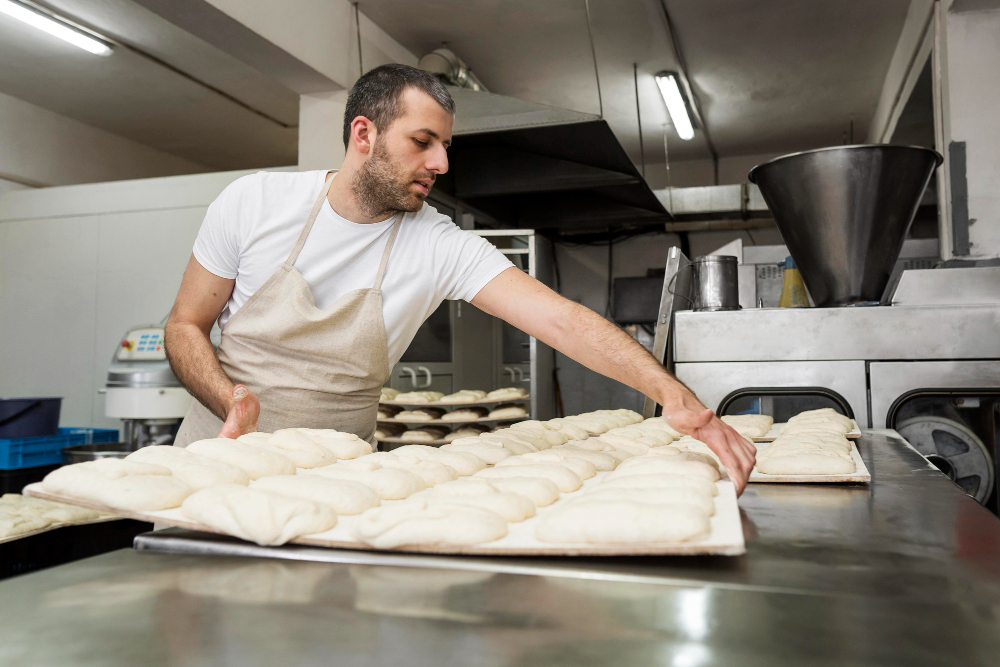
Dough Sheeter Explained: How to Get Even & Consistent Dough Every Time
In professional bakeries and pastry kitchens, dough consistency is one of the most critical factors affecting product quality. Uneven dough thickness can lead to inconsistent baking, poor texture, and unnecessary waste. This is why many commercial kitchens rely on dough sheeters as an essential part of their dough processing workflow.
Designed to flatten dough evenly and precisely, dough sheeters help bakeries, pastry shops, and food production facilities achieve repeatable results at scale. From laminated pastries to pizza bases, this equipment plays a crucial role in maintaining efficiency and quality standards.
What Is a Dough Sheeter?
A dough sheeter is a commercial bakery machine used to roll and flatten dough into uniform sheets with controlled thickness. Unlike manual rolling, which depends heavily on operator skill, a dough sheeter applies consistent pressure across the entire dough surface.
This machine is commonly used for:
- Pastry dough
- Croissants and laminated dough
- Pizza bases
- Pie crusts
- Bakery and confectionery dough
By using a dough sheeter, professional kitchens can ensure precision, speed, and consistency in every batch.
Why Dough Sheeters Are Essential in Professional Kitchens
1. Even Dough Thickness
One of the biggest challenges in dough preparation is achieving uniform thickness. A dough sheeter eliminates uneven spots that can cause inconsistent baking or texture issues.
2. Improved Production Efficiency
Manual rolling is slow and physically demanding. Dough sheeters significantly reduce preparation time, allowing staff to focus on other critical kitchen tasks.
3. Consistent Product Quality
Consistency builds brand trust. When every pastry, pizza base, or dough sheet has the same thickness, the final baked products look and taste the same every time.
4. Reduced Physical Strain
Flattening dough by hand requires repetitive motion and strength. Using commercial equipment improves ergonomics and reduces worker fatigue.
Types of Dough Sheeters
Different kitchens have different production needs. Understanding the available types helps in choosing the right machine.
Tabletop Dough Sheeters
- Compact and space-saving
- Suitable for small bakeries and cafés
- Ideal for low to medium production volumes
Floor-Standing Dough Sheeters
- Larger working surface
- Higher capacity
- Commonly used in commercial bakeries and hotels
Reversible Dough Sheeters
- Dough passes back and forth through rollers
- Excellent for laminated dough
- High precision thickness control
Each type offers unique advantages depending on menu focus and kitchen layout.
Key Features to Look for in a Dough Sheeter
When selecting a dough sheeter for commercial use, consider these essential features:
- Adjustable thickness settings
- Food-grade stainless steel construction
- Smooth roller operation
- Easy-to-clean design
- Safety guards and emergency stop functions
High-quality construction ensures durability, hygiene compliance, and long-term performance.
Dough Sheeters vs Manual Dough Rolling
| Manual Rolling | Dough Sheeter |
|---|---|
| Skill-dependent | Consistent results |
| Time-consuming | Fast processing |
| Uneven thickness | Precise control |
| Physically demanding | Ergonomic operation |
This comparison highlights why dough sheeters are standard equipment in professional bakeries.
How Dough Sheeters Fit into the Bakery Workflow
Dough sheeters are rarely used in isolation. In a well-designed bakery production line, they work alongside other dough preparation machines to create a smooth and efficient process.
For example, portioning and shaping equipment discussed in the article Bun Divider Rounder Machines: Improve Speed & Consistency in Bakeries complements dough sheeters by ensuring dough portions are evenly divided before or after sheeting, depending on the recipe.
Similarly, proper dough mixing is essential before sheeting. Many professional kitchens rely on equipment within the Fork Mixers category to achieve optimal dough structure before flattening.
Applications Across Bakery and Foodservice Operations
Pastry & Viennoiserie Production
- Laminated dough for croissants
- Puff pastry preparation
- Consistent layer thickness
Pizzerias
- Uniform pizza bases
- Controlled dough elasticity
- Faster preparation during peak hours
Commercial Bakeries
- High-volume dough processing
- Standardized production
- Reduced waste
From artisan shops to industrial kitchens, dough sheeters support scalable and reliable production.
Experience
Professional bakers and pastry chefs use dough sheeters daily to maintain precision and speed under demanding production schedules.
Expertise
These machines are engineered with precise roller systems and adjustable controls, reflecting deep technical expertise in dough handling.
Authoritativeness
Dough sheeters are a standard fixture in baking schools, professional kitchens, and commercial bakeries worldwide.
Trustworthiness
Manufactured using food-safe materials and designed for heavy use, commercial dough sheeters meet strict hygiene and safety standards.
Maintenance and Best Practices
To keep your dough sheeter operating at peak performance:
- Clean rollers and surfaces after each use
- Avoid processing dough beyond recommended capacity
- Inspect belts and moving parts regularly
- Train staff on correct operation
Proper maintenance ensures consistent results and extends machine lifespan.
Common Mistakes to Avoid
- Choosing a machine that is too large or too small for production needs
- Ignoring available kitchen space
- Overlooking cleaning accessibility
- Focusing only on price instead of build quality
Making informed decisions prevents operational issues in the long term.
Frequently Asked Questions (FAQ)
What types of dough can be processed with a dough sheeter?
Dough sheeters are suitable for pastry dough, laminated dough, pizza bases, pie crusts, and various bakery dough types.
Is a dough sheeter suitable for small bakeries?
Yes. Compact tabletop models are ideal for small bakeries and cafés with limited space.
Can thickness be adjusted easily?
Most commercial machines feature adjustable controls that allow precise thickness settings for different recipes.
How is a dough sheeter different from a dough roller?
Dough sheeters are ideal for creating flat sheets and laminated dough, while dough rollers are more commonly used for shaping and flattening dough balls.
Are dough sheeters difficult to clean?
No. Professional models are designed with hygiene in mind, featuring smooth surfaces and accessible components.
Conclusion
A dough sheeter is an essential investment for bakeries and foodservice operations that demand precision, consistency, and efficiency. By automating the dough flattening process, this machine helps businesses deliver high-quality products while reducing labor intensity and waste.
When integrated with proper mixing and portioning equipment, dough sheeters become a cornerstone of a professional, scalable bakery workflow.