


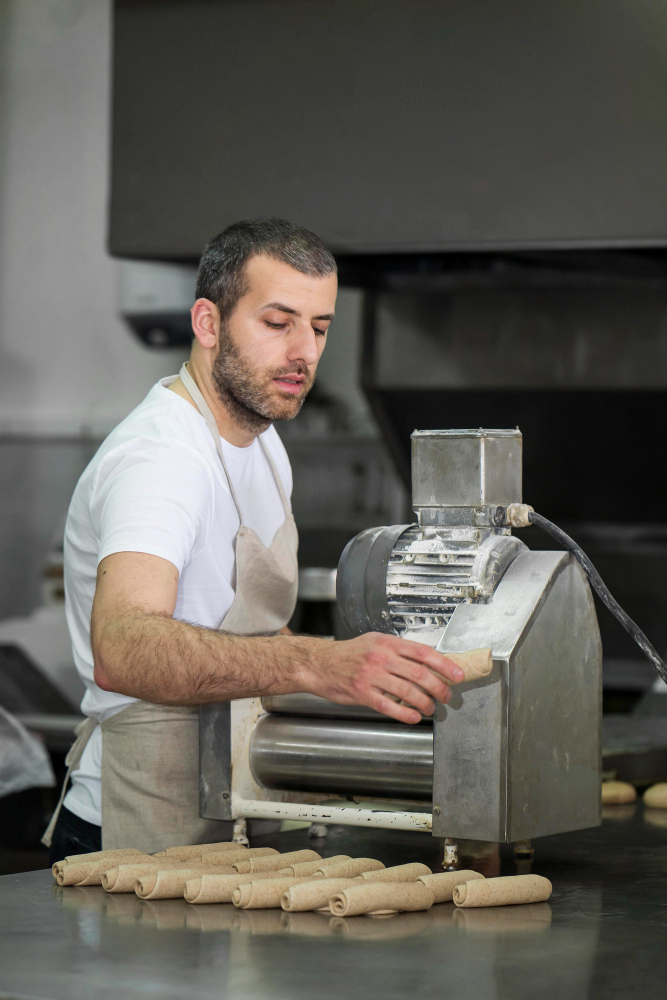
Commercial Dough Rollers: Essential Equipment for Bakeries & Pizzerias
In today’s competitive food service industry, consistency, efficiency, and product quality are no longer optional—especially for bakeries and pizzerias that rely heavily on dough preparation. One of the most important investments for professional kitchens is a commercial dough roller. This equipment is designed to simplify the dough flattening process while maintaining uniform thickness, texture, and shape for a wide range of baked products.
Unlike manual rolling methods that depend on skill and stamina, commercial dough rollers provide repeatable results at scale. From artisan bakeries to high-volume pizza operations, this machine plays a critical role in improving productivity and ensuring every product meets the same quality standards.
What Is a Commercial Dough Roller?
A commercial dough roller is a specialized piece of food processing equipment used to flatten and shape dough evenly. It replaces traditional hand rolling by applying controlled pressure through rollers, allowing operators to achieve precise thickness with minimal effort.
This equipment is widely used for:
- Pizza bases
- Pastry sheets
- Flatbreads
- Pie crusts
- Bakery dough preparation
By automating a labor-intensive task, dough rollers reduce preparation time while improving consistency across batches.
Why Dough Rollers Are Essential for Professional Kitchens
1. Consistent Product Quality
Uniform dough thickness is critical for even baking. Inconsistent dough can lead to uneven cooking, texture problems, and customer dissatisfaction. A dough roller machine ensures repeatable results regardless of who operates it.
2. Increased Productivity
Manual rolling slows down production, especially during peak hours. Commercial dough rollers allow staff to process large quantities of dough quickly, enabling faster service and higher output.
3. Reduced Labor Fatigue
Hand rolling dough is physically demanding and can lead to staff fatigue or injury over time. Using automated equipment minimizes strain and supports better workplace ergonomics.
4. Cost Efficiency Over Time
While the upfront investment may seem significant, reduced labor costs, minimized waste, and improved efficiency make dough rollers a cost-effective solution in the long term.
Types of Commercial Dough Rollers
Choosing the right dough roller depends on your kitchen’s workflow, menu, and production volume.
Manual Dough Rollers
- Best for small bakeries or cafés
- Require operator control
- Lower initial investment
Semi-Automatic Dough Rollers
- Balance between automation and manual adjustment
- Suitable for medium-sized operations
- Improved consistency with moderate output
Fully Automatic Dough Rollers
- Ideal for high-volume bakeries and pizzerias
- Minimal operator input
- High precision and speed
Each type offers different advantages depending on business scale and production demands.
Key Features to Consider Before Buying
When selecting a dough roller machine, evaluating technical specifications is crucial to ensure long-term performance and reliability.
Important features include:
- Adjustable thickness settings
- Food-grade stainless steel construction
- Easy-to-clean design
- Safety guards and emergency stops
- Compact footprint for limited kitchen space
Professional buyers should also consider machine durability, warranty coverage, and after-sales support.
Dough Rollers vs Other Dough Processing Equipment
While dough rollers are highly versatile, they are not the only solution in dough preparation. For example, some kitchens use dough sheeters for laminated dough applications such as croissants and puff pastries.
Many professional kitchens combine dough rollers with other equipment categories, including Dough Sheeters, to achieve maximum flexibility across different recipes. Understanding each machine’s purpose helps operators design an efficient production line.
Applications in Bakeries and Pizzerias
Bakery Use Cases
- Preparing dough for breads and pastries
- Achieving consistent crust thickness
- Reducing manual labor during peak production
Pizzeria Use Cases
- Creating uniform pizza bases
- Supporting high-volume service
- Maintaining consistent cooking times
For businesses focused on portion control and shaping, dough rollers are often paired conceptually with dividing equipment discussed in the article Bun Divider Rounder Machines: Improve Speed & Consistency in Bakeries, helping streamline the entire dough workflow from portioning to flattening.
Experience
Commercial dough rollers are used daily by professional bakers and chefs who demand reliability and efficiency. Their continued adoption across the industry reflects proven performance in real-world kitchens.
Expertise
Manufacturers design these machines with food engineering expertise, ensuring optimal pressure, hygiene standards, and durability suited for commercial use.
Authoritativeness
Dough rollers are standard equipment in professional bakeries, culinary schools, and restaurant kitchens worldwide, reinforcing their role as an industry benchmark.
Trustworthiness
When sourced from reputable suppliers, commercial dough rollers comply with food safety regulations and are built to withstand intensive daily use.
Maintenance and Best Practices
To extend the lifespan of your dough roller:
- Clean rollers after each use
- Avoid overloading the machine
- Follow manufacturer maintenance schedules
- Train staff on proper operation
Routine care ensures consistent performance and reduces unexpected downtime.
Common Mistakes to Avoid
- Choosing a machine that exceeds or falls short of production needs
- Ignoring space constraints in the kitchen
- Overlooking cleaning accessibility
- Selecting low-quality materials that corrode over time
Avoiding these pitfalls helps maximize your return on investment.
Frequently Asked Questions (FAQ)
What products can be made with a commercial dough roller?
Commercial dough rollers are suitable for pizza dough, flatbreads, pastries, pie crusts, and various bakery dough applications.
Is a dough roller suitable for small bakeries?
Yes. Manual or semi-automatic models are ideal for small bakeries looking to improve consistency without high capital costs.
How thick can the dough be adjusted?
Most machines offer adjustable thickness settings ranging from very thin sheets to thicker dough, depending on the model.
Are commercial dough rollers easy to clean?
Professional models are designed with hygiene in mind, using stainless steel surfaces and removable components for easy cleaning.
How does a dough roller differ from a dough sheeter?
Dough rollers are primarily used for flattening and shaping dough, while dough sheeters are specialized for laminated dough requiring layered structures.
Conclusion
A commercial dough roller is more than just a convenience—it is a strategic investment for bakeries and pizzerias seeking efficiency, consistency, and scalability. By reducing labor intensity and ensuring uniform results, this equipment supports both operational excellence and product quality.
Whether you operate a small artisan bakery or a high-volume pizza kitchen, selecting the right dough roller can significantly enhance your workflow and customer satisfaction. With proper selection, maintenance, and integration into your production line, this machine becomes an essential asset in any professional food service operation.