


Cool Rooms & Freezer Rooms
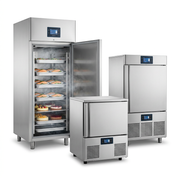
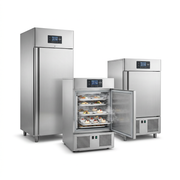
Compare commercial cool rooms for cafes, restaurants, caterers and bakeries that have outgrown upright storage. The current Atlantic range is Thermaster trolley-friendly mini cool rooms, in single-access and pass-through formats from 580L to 1,450L, so loaded trolleys can roll straight in instead of stock being lifted onto shelves.
Need individual cabinets instead? Browse commercial fridges or commercial freezers, or chill cooked food quickly in a commercial blast chiller. Not sure which format suits your site? Read the commercial cool room buying guide.
-
 Thermaster 580L Trolley Friendly, Pass-Through Mini Cool Room - PTRTC-1
$7,190.00From:$5,500.35 Rent $69.81 + GST/week
Couldn't load pickup availability
-
 Thermaster 1450L Trolley Friendly, Single Access Mini Cool Room - RTC-2
$7,190.00From:$5,500.35 Rent $69.81 + GST/week
Couldn't load pickup availability
-
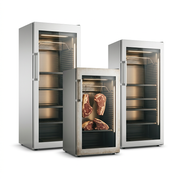
 Thermaster 930L Trolley Friendly, Single Access Mini Cool Room - RTC-1
$5,790.00From:$4,429.35 Rent $56.21 + GST/week
Couldn't load pickup availability
-
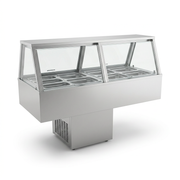
 Thermaster 1006L Trolley Friendly,Pass-Through Mini Cool Room - PTRTC-2
$9,090.00From:$6,953.85 Rent $88.25 + GST/week
Couldn't load pickup availability


WE’RE HERE TO ANSWER
Cool Rooms & Freezer Rooms FAQs
What size commercial cool room do I need?
Add up your peak stock in crates, trays and trolleys, then allow extra space for airflow and stock rotation. Atlantic's current mini cool rooms range from 580L to 1,450L, so check your delivery-day volume fits before you consider a larger custom walk-in.
What is the difference between a mini cool room and a walk-in cool room?
A mini cool room is a compact, trolley-friendly insulated room in a fixed size, while a walk-in is usually a larger room built to fit the space. Mini rooms suit cafes and smaller kitchens; larger venues often need a custom walk-in.
Does a commercial cool room need three-phase power?
Not always. It depends on the compressor, so read the model's data plate or specification sheet for voltage and amperage. Have a licensed electrician confirm the circuit and whether three-phase is available at your site before you order.
What temperature must a commercial cool room hold?
Cold potentially hazardous food, such as meat, dairy and prepared salads, must be kept at 5°C or colder under the Australian Food Standards Code. Check the model's operating range and ambient limits, and check room temperature regularly with a thermometer.
Who can install and service a commercial cool room in Australia?
A licensed refrigeration technician must handle the refrigerant circuit and a licensed electrician must make the power connection. Ask your supplier who commissions the room, what the installation scope includes and who services it afterwards.